
Make your CV shine
Are you applying for plenty of jobs but not getting through that first paper sift? Your CV could be letting you down. Perhaps you struggle to know what work experience or transferable skills to highlight, or how to craft a compelling personal statement. Or maybe you struggle with formatting your CV so it’s clear and easy to read?
We recently teamed up with James Sauaga from Hired.co.nz to discuss some crucial mistakes jobseekers make with their CVs and how to put together a CV that stands out from the crowd.
James and Do Good Jobs managing director David Morrison answered a wide range of questions and shared some great info during the session, and it’s too good not to share here on our blog.
Creating a CV that stands out
I can just use the same CV for every role I apply for, right?
No! Just like you should be tailoring your cover letter, you should tailor your CV to the role you are applying for too. That means picking relevant work experience, skills and achievements.
How should I format my CV?
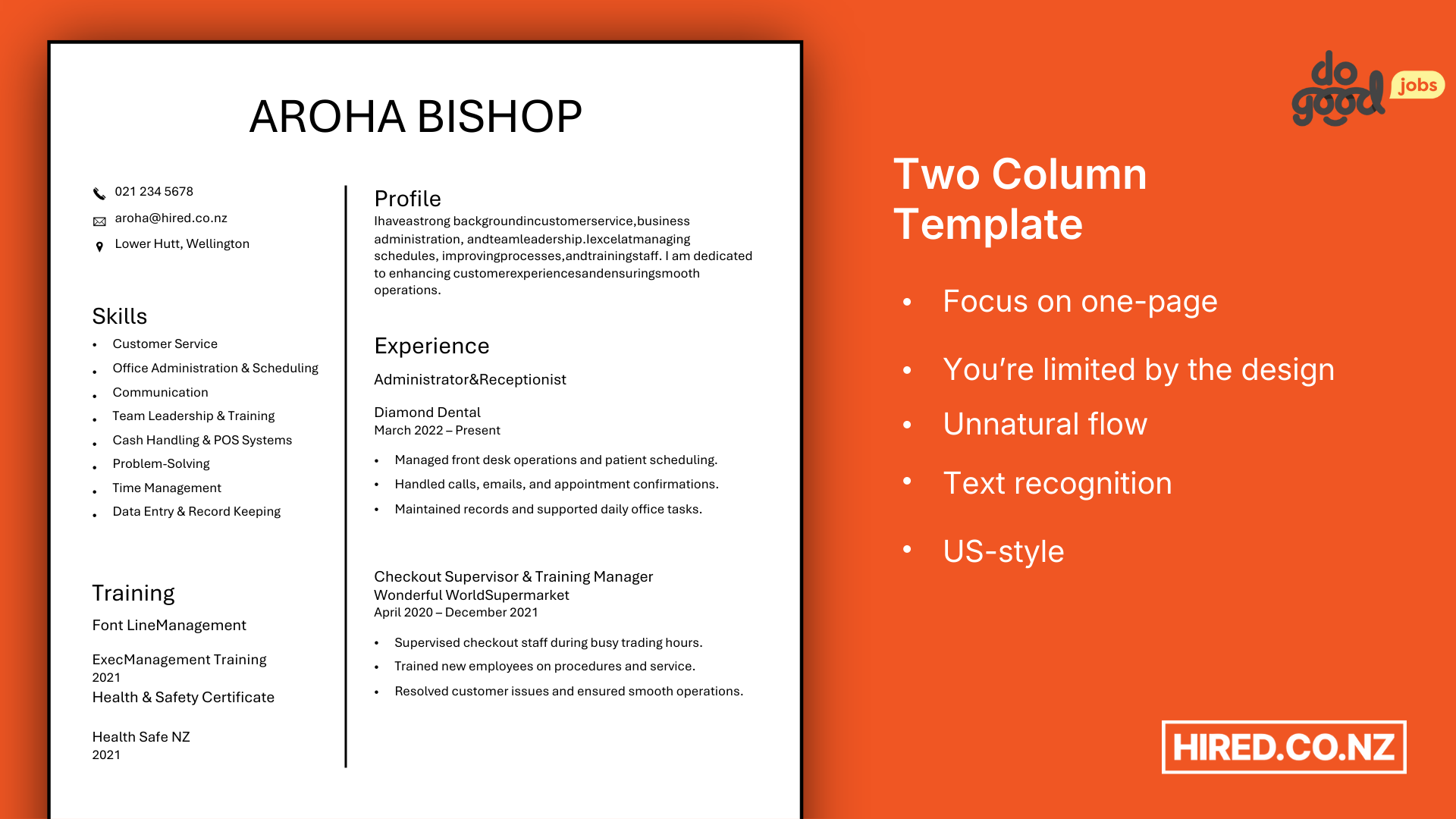
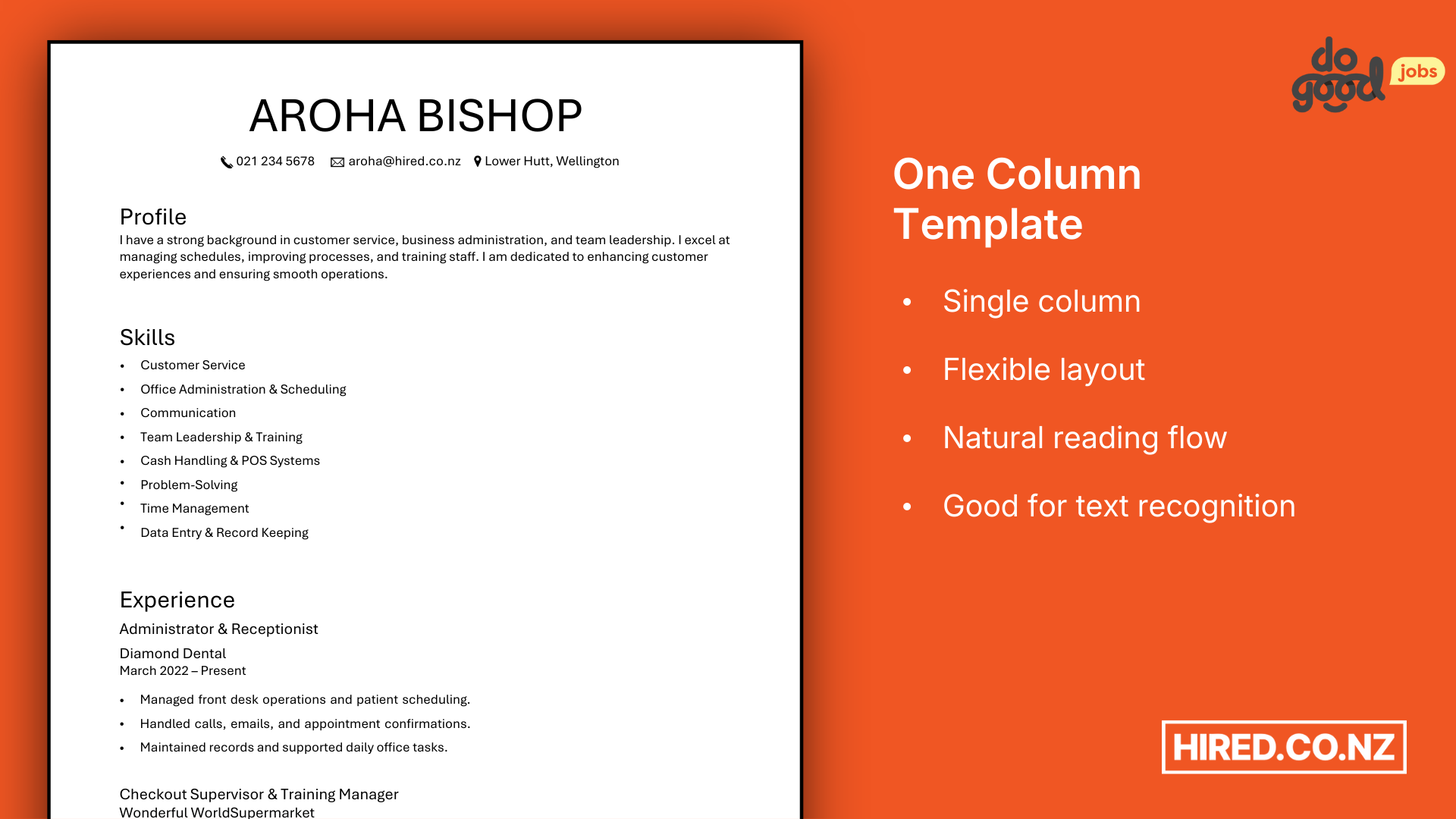
Make sure any template you use doesn’t restrict the amount of information you can include in your CV or make it hard for an employer to read that information.
A double-column template, for example, can be restrictive. A single column layout is by far the better option - it gives you room for detail, and it gives you room to grow your CV as your career does. Single-column CVs also make it easier to read, whether that’s being done by a human recruiter or an Application Tracking System (ATS).
Does my CV really need to be only one page?
You might have been told in the past that your CV should be only one page, but that idea is pretty outdated now. You don’t want to ramble on for pages and pages, but if there’s enough relevant information to fill more than one page, then absolutely stretch it to two or three. The key is that all the information you include should be relevant to the role you are applying for.
How do I create a good Skills section?
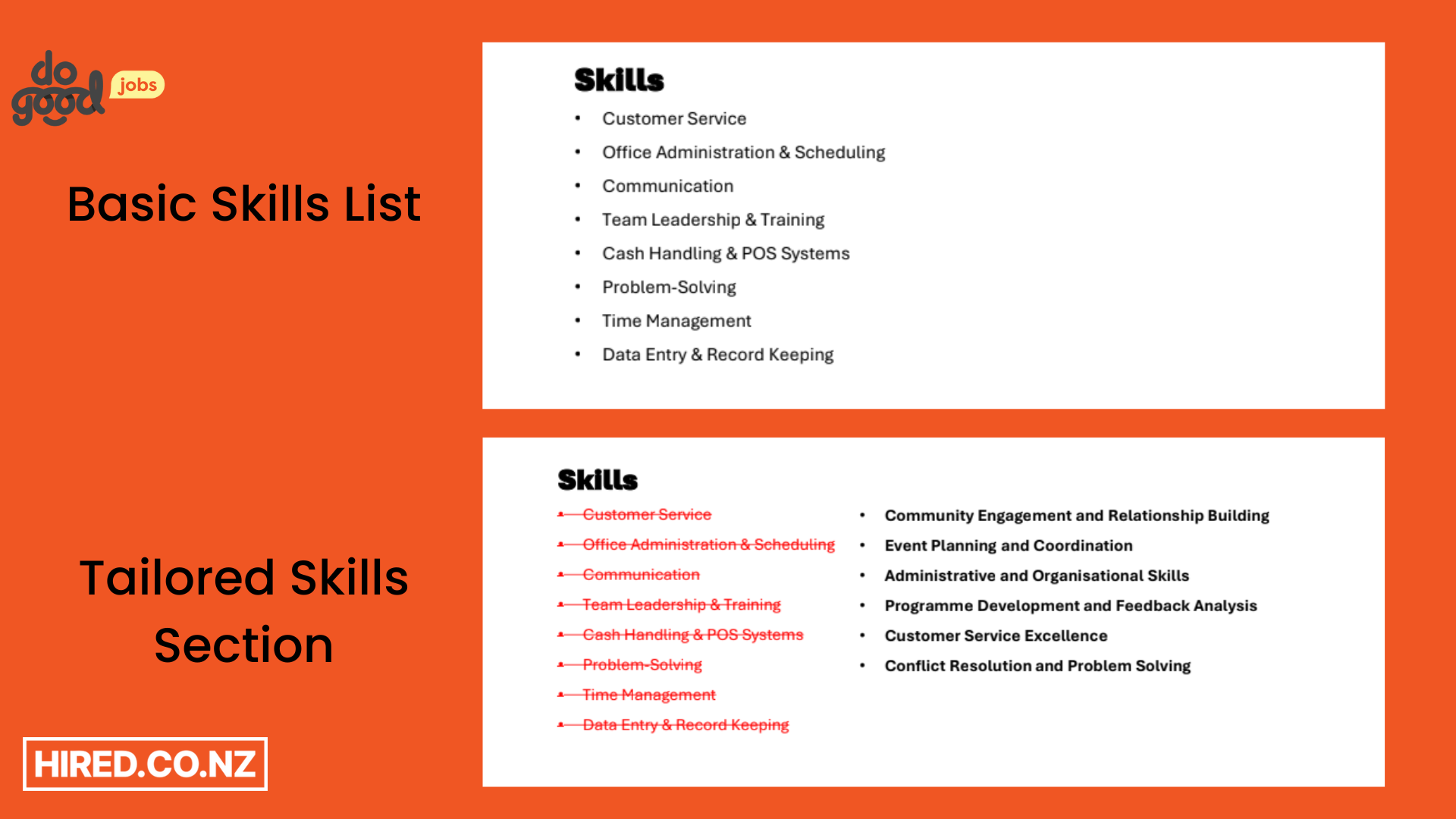
One of the best ways to start is to look at the job description and pick out the key skills and experience that the employer is looking for. Then you can create a Skills section on your CV which aligns with the role you are applying for.
We’re not suggesting that you should make up skills if you can’t demonstrate them (that’s a surefire route to getting caught out during an interview or once you have the job), but you can tweak your skills to fit.
For example, if you’ve got experience as a receptionist and you are applying for a community coordinator role with a charity, it might not seem like a great fit. But if you think more carefully, you will discover skills such as relating to people, clear communication and problem solving, all of which would fit the role you are applying for.
What’s the difference between a Skills section and an Experience section?
In the Skills section, you are giving a high-level overview of the skills you have. The Experience section allows you to list relevant work experience that demonstrates where and how you have used these skills in the past.
You may wonder if you need to bother with a Skills section, but it is something that many employers would expect to see, so it’s worth including. If your CV is likely to be read by an ATS, then a Skills section is also a great place to include keywords that will help your CV be matched.
How do I improve the Experience section of my CV?
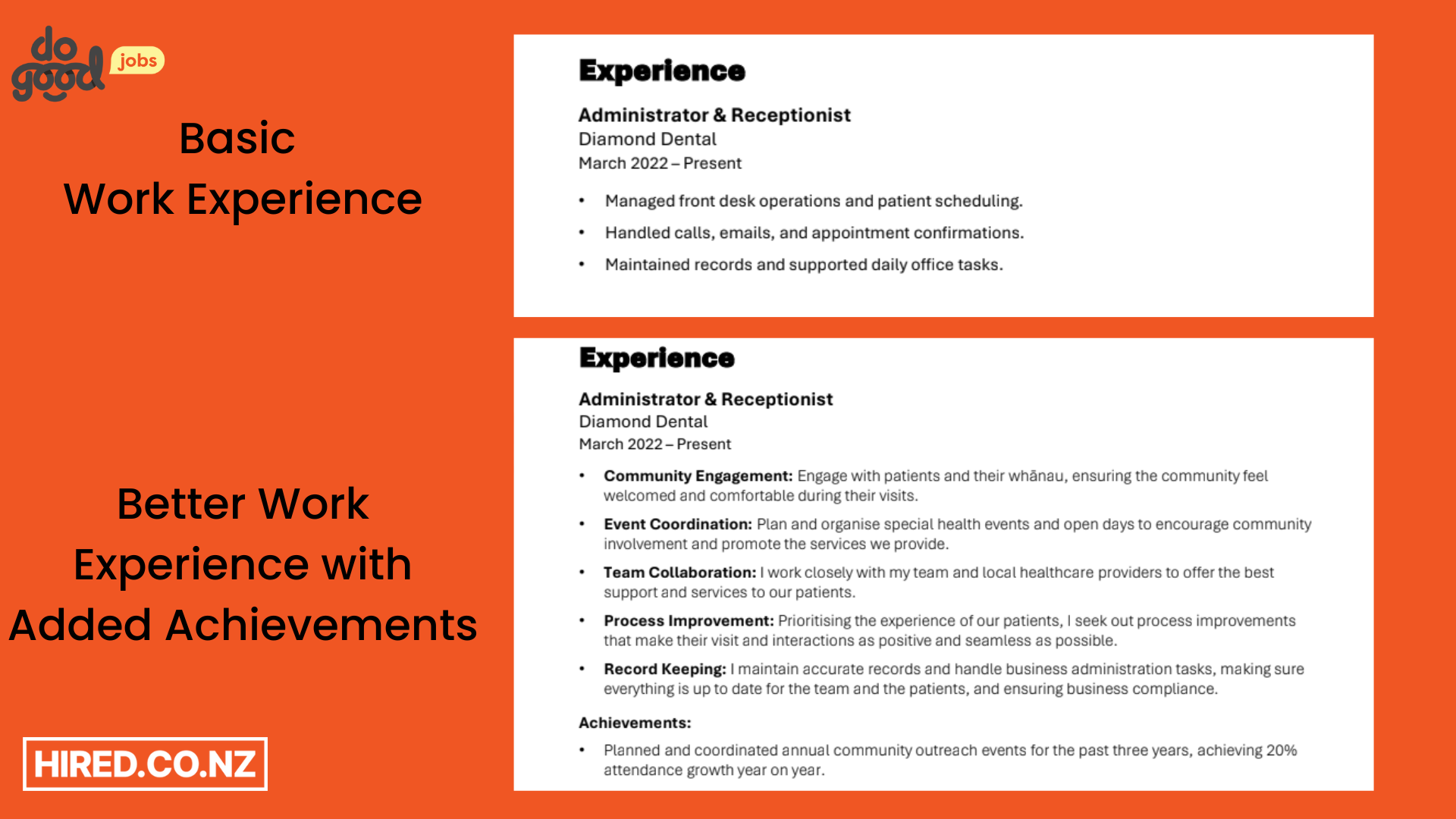
Often in this section, people simply list the jobs they’ve had and the basic responsibilities they held.
Just like with your Skills, by rewriting your Experience section in conjunction with the job ad, you can better tailor your experience. Don’t just list your basic responsibilities - show how those translate into the skills you need.
If you have concrete achievements from any past roles, e.g. increased customer numbers by 50% or gained 100 5-star reviews from clients, then highlight these in this section too. That can be the thing that differentiates you from other applicants who have similar experience.
How far back should my career history go?
If you’ve been working for a while, you’ve probably got a career history that spans several years, or maybe even decades and many different roles.
It’s not necessary to list every one of them! Usually, the last 3 or 4 roles will have the most relevant experience and skills. But if you’ve had a role early on in your career that’s a great fit with the one you are applying for, consider adding it. It’s about using good judgment as to what’s relevant.
Should I list personal interests or hobbies on my CV?
If you are just listing them because you think you should and they are no more than padding, then no. But if you have hobbies or interests that relate directly to the role you are applying for, then yes, consider listing them. This can also be helpful if you are early in your career and don’t have as much work experience to list. As with most of your CV, it’s about judgment and relevance.
Should I add my education to my CV?
Again, it depends on how relevant it is. There’s no real benefit to listing your high school qualifications, for example. But if you have a higher-level qualification or training in something specific that will make you stand out for the role you are applying for, then it’s worth adding it in.
Should I start my CV with a personal statement?
These can be a really great way of showing a bit of your personality and getting your values, skills and experience up front early on. Connecting with an employer through your statement can be particularly helpful in the for-purpose sector, where values alignment is an important component for many organisations.
But be careful that you aren’t just repeating what’s in other parts of your CV or in your cover letter.
TOP TIP - If you are going to write a personal statement, write it in the first person. Anything else sounds a bit weird!
Can I use AI to create my CV?
Yes…and no. There are some things that AI can be really helpful for, like:
Helping you to analyse the job description and pull out key points and keywords.
Analysing your current work experience alongside the job description and highlighting your relevant skills and experience.
Show your transferable skills (helpful if you are changing career paths, for example, from corporate to for-purpose).
Checking some parts of your CV to ensure you are using key words or phrases from the job description.
If you are modest, using AI to highlight your skills and experience can also give you a confidence boost, as you might find you are more qualified for a role than you give yourself credit for.
BUT - we don’t recommend simply copying and pasting large chunks of text from AI into your CV (or your cover letter). It still needs to have the human touch and be authentic to you.
We hope these tips give you some useful advice as you review your CV before your next application.
If you’d like some extra help, Hired.co.nz can help you create your CV through a guided process that leaves you with a well-formatted CV full of the right information. The process is powered by AI but developed using human input based on experience from years of working with jobseekers to tailor their CVs for their perfect role.
And, if you are currently job hunting and you haven’t already, we encourage you to sign up for a jobseeker account with Do Good Jobs so you can get for-purpose roles delivered straight to your inbox. You can do that here.
If you’d like to view the original webinar, you can do that here.